
What Makes a Home Feel Truly Luxurious? 8 Principles of Modern Luxury Interior Design
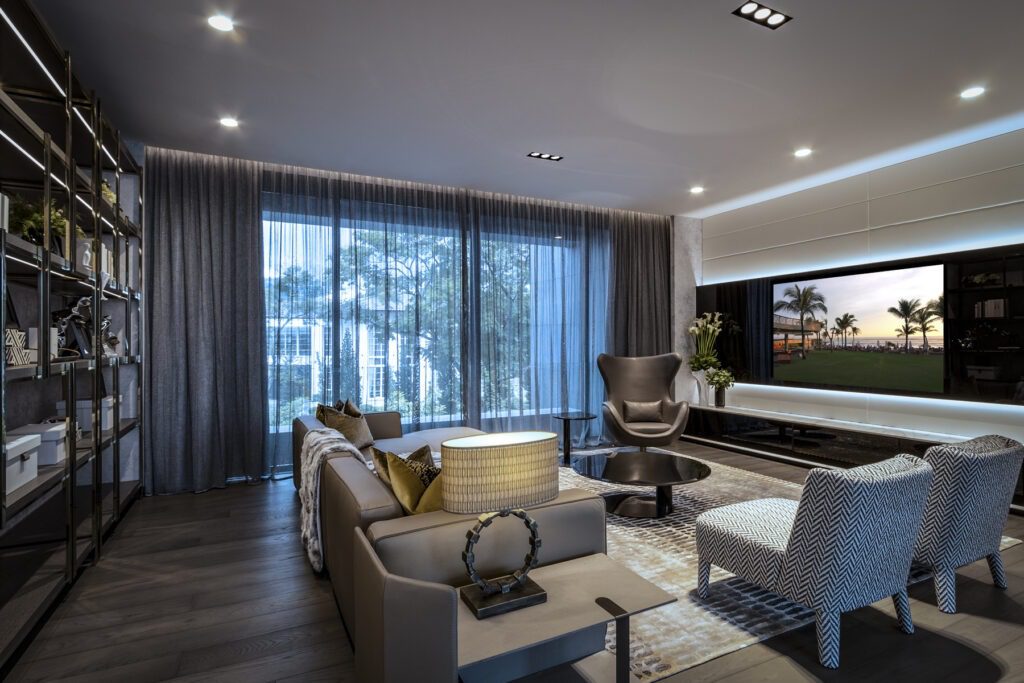
True luxury in an interior space is rarely defined by flashy trends or ornate embellishments. Instead, it is felt the moment you step into a room—a quiet sense of harmony, effortless comfort, and architectural clarity.
Luxury home interior design is ultimately about creating an environment that feels considered rather than simply expensive. Proportion, materiality, lighting, and bespoke details all contribute to that experience, turning a building envelope into an extraordinary personal sanctuary.
Luxury Isn't About How Much You Put Into a Room
In high-end residential design, opulent clutter often achieves the opposite of luxury, leaving spaces feeling chaotic and visually overwhelming. Modern luxury favors restraint, precision, and spatial balance over excessive decoration.
+————————————+—————————————+
| Traditional Opulence Approach | Modern Luxury Design Approach |
+————————————+—————————————+
| Excessive ornament & heavy trims | Clean lines & architectural volume |
| Multiplying decorative accents | High-tactility, premium raw materials |
| Standard off-the-shelf furnishings | Fully bespoke architectural joinery |
| Flat, high-intensity illumination | Layered, low-glare warm light scenes |
+————————————+—————————————+
When every architectural line, material joint, and lighting angle is executed with absolute precision, a home communicates sophisticated calm without needing to shout.
8 Principles Behind a Modern Luxury Interior
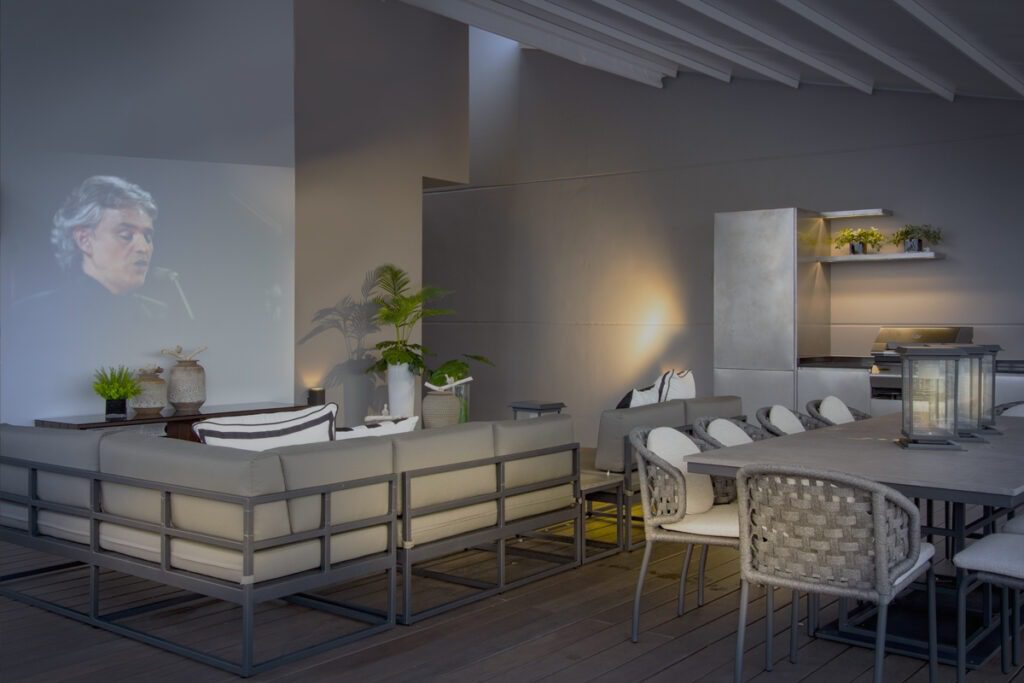
To achieve an atmosphere of quiet sophistication, expert studios rely on eight foundational principles that balance spatial volume, tactile quality, and everyday functionality.
[ 1. Spatial Proportion & Flow ]
│
[ 2–3. Restrained Materiality ]
│
[ 4–6. Joinery, Light & Texture ]
│
[ 7–8. Restraint & Daily Rituals ]
1. Start With Proportion, Not Decoration
Before introducing single pieces of furniture or decorative finishes, the room’s proportions, ceiling heights, and circulation sightlines must be mastered. Designing around architectural scale ensures that spatial volumes feel well-balanced, comfortable, and intuitive to move through.
2. Give Materials Room to Speak
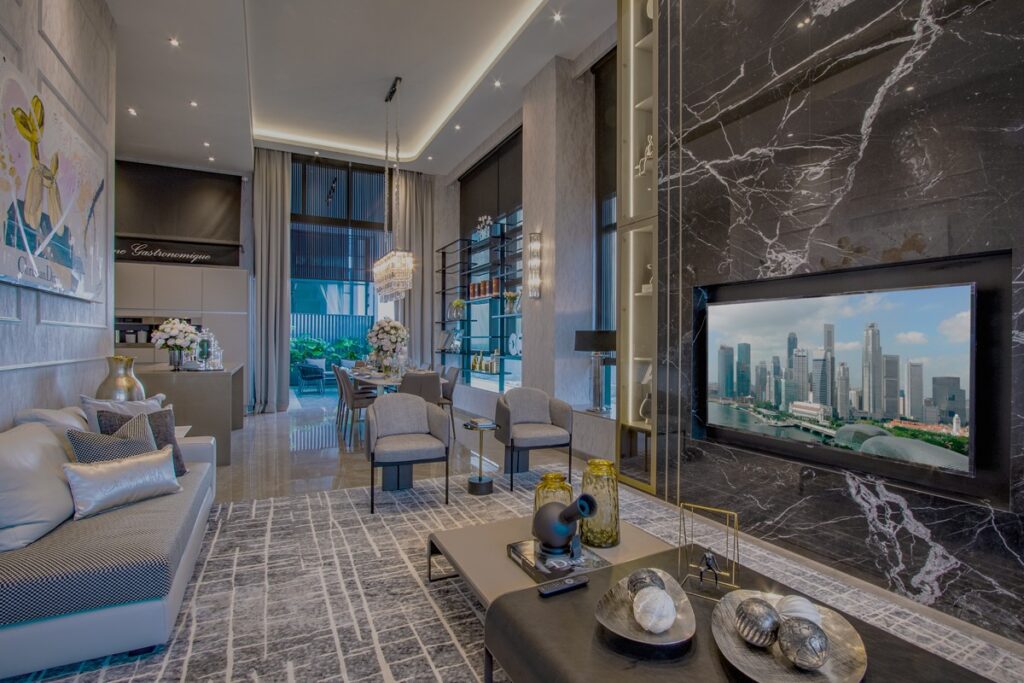
High-grade natural materials—such as book-matched Italian marble, raw travertine, smoked oak, and brushed bronze—possess an inherent beauty. Allowing large, uninterrupted surface applications gives these organic textures room to anchor the space naturally.
3. Choose Fewer Materials, Better
Visual chaos occurs when too many contrasting colors and patterns compete for attention. Adopting a restrained material palette (limiting a main living hall to two or three core tactile elements) creates an immediate sense of visual continuity across the floor plate.
4. Make Bespoke Joinery Part of the Architecture
Custom millwork is the secret spine of high-end interiors. Tailoring built-in wardrobes, wall paneling, display niches, and concealed storage to align flush with walls makes storage read as pure architecture rather than added furniture clutter.
+———————————–+—————————————+
| Joinery Application | Architectural Luxury Result |
+———————————–+—————————————+
| Flush Wall Paneling | Conceals doors & utilities seamlessly |
| Integrated Display Niches | Frames art with hidden micro-leds |
| Tailored Walk-in Wardrobes | Maximizes vertical storage invisibly |
+———————————–+—————————————+
5. Layer Lighting Instead of Relying on a Single Source
A single overhead light source flattens a room and introduces harsh glares. Modern luxury relies on multi-layered lighting schemes—combining indirect LED ceiling coves, low-glare architectural downlights, wall washers, and low-level ambient lamps running on warm color temperatures (2700K–3000K).
6. Use Texture to Add Warmth
When a color palette is kept intentionally refined and neutral, texture becomes the primary design tool. Layering tactile contrasts—such as bouclé fabrics, soft velvet, brushed metals, coarse linen, and slatted wood—adds inviting depth without visual clutter.
7. Create Visual Calm Through Restraint
Knowing what to leave out is just as important as knowing what to include. Negative space allows the eye to rest, framing key architectural features, artwork, and view corridors with effortless elegance.
8. Design Around the Rituals of Everyday Life
The ultimate luxury is a home tailored around how you actually live. From a custom coffee bar integrated into a morning pantry to acoustic insulation in private study suites, designing for personal routines creates functional ease.
Modern Luxury vs. Traditional Luxury: What's Changed?
The definition of a prestigious home has evolved dramatically over past decades:
| Design Dimension | Traditional Luxury Interior | Modern Luxury Interior |
| Aesthetic Philosophy | Ornate, formal, visually complex | Clean-lined, understated, tactile |
| Material Application | Heavy damasks, gilded trims, dark woods | Natural stone, warm timber, brushed metals |
| Spatial Experience | Formal, rigid compartmentalization | Open-concept flow, indoor-outdoor connection |
| Functionality | Showpiece aesthetic over daily comfort | Seamless ergonomics, hidden smart technology |
How Do You Keep a Minimalist Interior From Feeling Cold?
Minimalism is often misunderstood as stark, white, and clinical. In high-end residential interiors, preventing a minimalist footprint from feeling sterile relies on key warming techniques:
- Warm Color Undertones: Opt for natural limestone, warm taupe, French grey, and mushroom tones instead of stark bluish whites.
- Organic Materiality: Incorporate natural timber wall paneling, brushed brass accents, and honed natural stone.
- Ambient Architectural Light: Use concealed cove lighting to wash warm light down walls, softening hard structural corners.
- Soft Soft-Furnishing Layering: Introduce high-pile wool rugs, textured drapery, and soft leather seating.
What Does "Bespoke" Really Mean in Luxury Interiors?
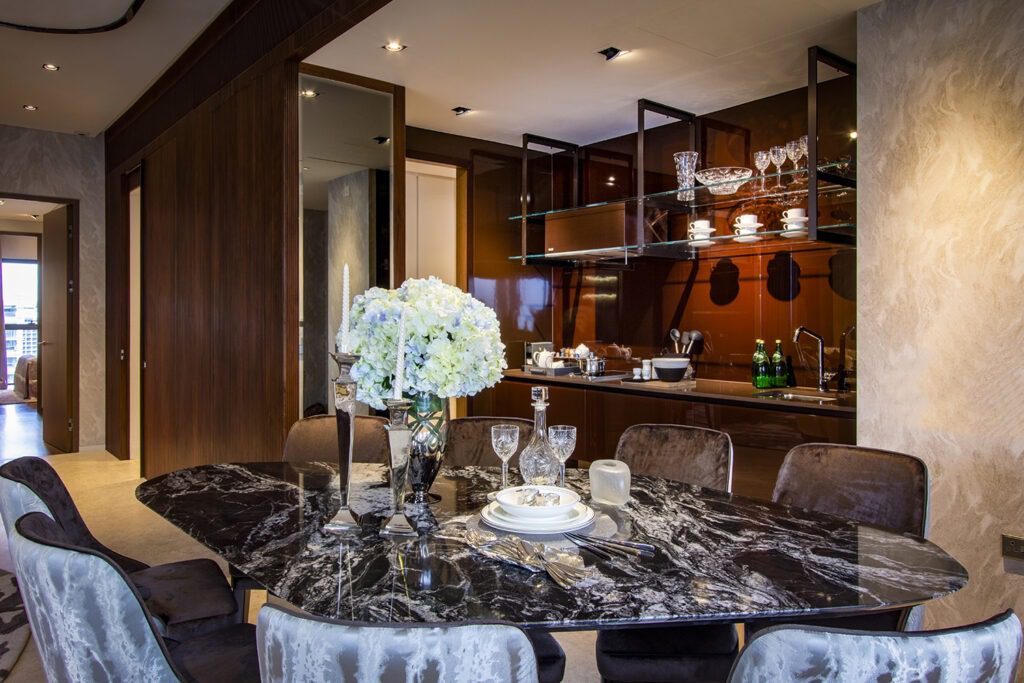
In the context of bespoke interior design in Singapore, “bespoke” goes far beyond simply selecting custom fabric colors for a sofa.
[ Structural Space Planning ]
│
[ Millwork & Architectural Detailing ]
│
[ Custom Stone & Metal Fabrication ]
│
[ Tailored FF&E & Material Procurement ]
True bespoke design represents an end-to-end commitment to crafting one-of-a-kind architectural elements specifically tailored to a building’s unique grid and an owner’s personal lifestyle:
- Custom Stone Fabrication: Sourcing specific marble slabs directly from quarries and precision-cutting them to match room dimensions.
- Integrated Architectural Joinery: Engineering millwork with concealed hardware, integrated acoustic dampening, and custom metal trim inlays.
- Curated Loose FF&E: Commissioning original furniture, hand-knotted rugs, and custom lighting installations scaled perfectly to room volumes.
Inside SuMisura's Approach to Modern Luxury
The principles of modern luxury must also respond to the realities of residential interior design in Singapore—from compact urban layouts to tropical light, humidity, and the relationship between indoor and outdoor spaces.
At SuMisura, our approach to “interior haute couture” fuses international design standards with a deep understanding of local site conditions.
[ Tropical Light & Orientation Balancing ]
│
[ High-Humidity Material Selection ]
│
[ Seamless Indoor-Outdoor Flow Creation ]
Whether balancing soaring double-height volumes in a landed estate or optimizing panoramic city views in a luxury penthouse, SuMisura crafts refined spaces defined by spatial proportion, rich natural textures, and seamless joinery.
Design Your Home With SuMisura
Creating a home that feels truly exceptional requires a design partner with architectural vision, spatial mastery, and an uncompromising dedication to fine craftsmanship.
Through an extensive portfolio of celebrated residential projects, SuMisura transforms private residences into timeless sanctuaries crafted around your unique lifestyle.
Contact the SuMisura studio today to schedule your private design consultation.